If you use a BHA toner or salicylic acid cleanser, you've probably already been told to rethink it during pregnancy. But the full picture is a bit more nuanced than a flat yes or no. And there's one ingredient in the salicylate family that catches people completely off guard, because it's marketed as the natural, gentler alternative.
So, is salicylic acid OK during pregnancy?
PregSafe rates salicylic acid as limit, not avoid. At concentrations up to 2% in rinse-off products like cleansers and face washes, it's generally considered low risk. Systemic absorption from topical use is minimal, something backed up by a 2011 peer-reviewed article in the Canadian Family Physician and consistent with ACOG's position on skincare during pregnancy.
The products to step back from are leave-on treatments, high-strength spot treatments used daily, and professional-grade peels. Those create higher absorption over larger skin areas. At higher doses, particularly in the third trimester, salicylates have well-documented effects on fetal circulation and labour, as recorded in a review in Obstetrics & Gynaecology. Occasional use, small areas, rinse-off: generally fine. Daily leave-on BHA across your whole face: not the right time.
The same logic applies when you're TTC. Stick to low-concentration, rinse-off use. During breastfeeding, the guidance is the same: targeted and low-dose is a reasonable approach.
The rest of the salicylate family
Salicylic acid isn't the only salicylate in your bathroom. Here's how PregSafe rates the key ones you might come across on ingredient labels:
- Betaine salicylate: limit (a gentler BHA derivative, same family, same caution)
- Sodium salicylate: limit (used as a preservative and skin soother in some products)
- Methyl salicylate: avoid (found in muscle rubs and wintergreen-scented products; absorbs quickly through skin and converts to salicylic acid in your body)
And then there's the natural ingredient.
Willow bark: the "natural" BHA that's actually flagged as avoid
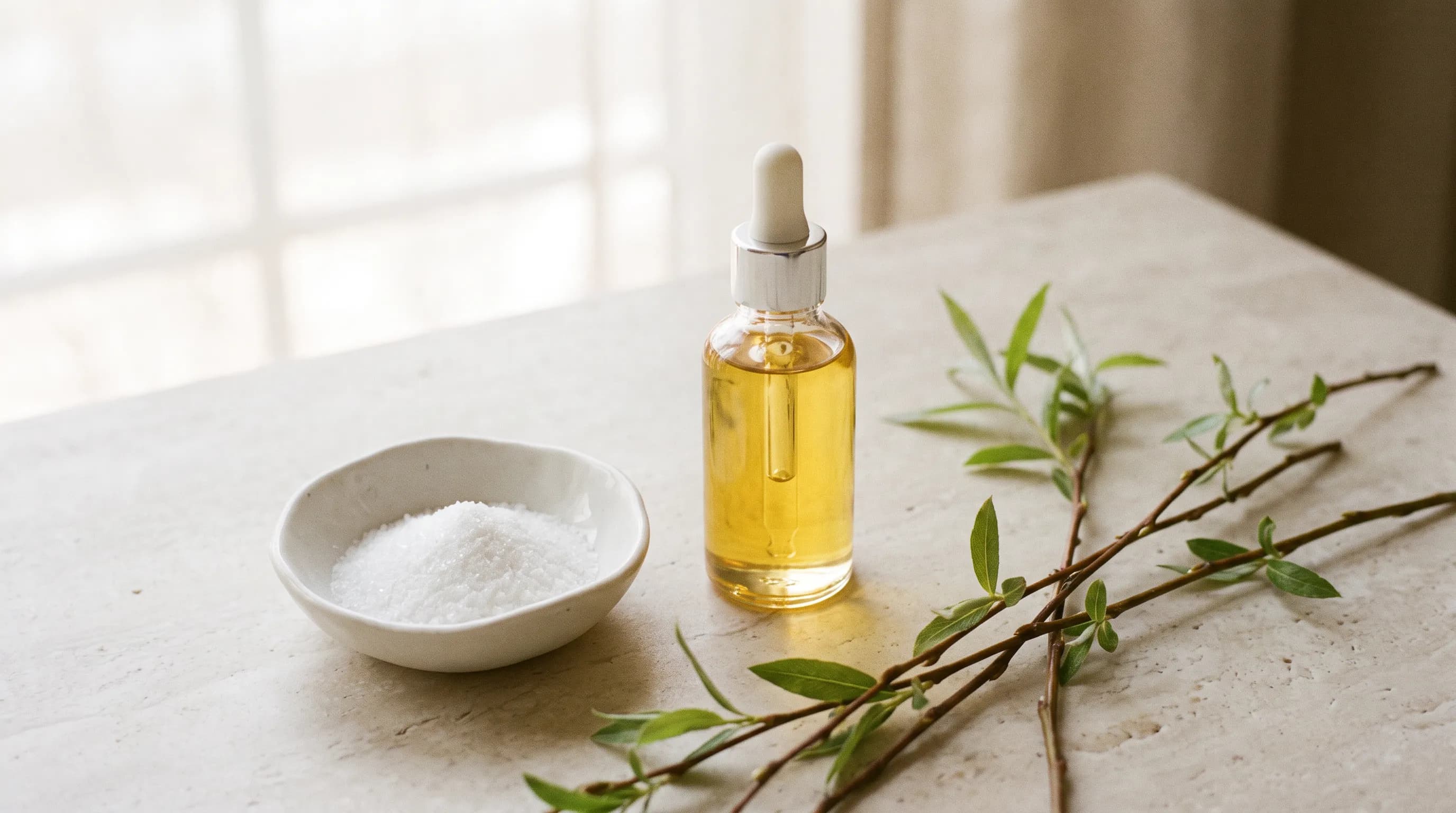
Willow bark extract is having a moment in skincare. It's sold as the plant-based, gentler alternative to BHA, and it appears in products marketed as natural, clean, or pregnancy-friendly. The problem is that willow bark is a natural source of salicin, which your body converts into salicylic acid, a process confirmed by pharmacokinetic research published in peer-reviewed literature. The end result in your bloodstream is the same.
PregSafe flags all forms of willow bark (salix alba) as avoid during pregnancy, when TTC, and during breastfeeding. This isn't overcautious: the European Medicines Agency (EMA) specifically states that women in the third trimester should not take willow bark medicines, noting that salicylates cross the placenta and are eliminated slowly in newborns. There's also no pregnancy-specific safety data for willow bark, which means there's no evidence base to point to for comfort.
It's a good example of why "natural" doesn't automatically mean lower risk during pregnancy. If you see willow bark, salix alba, or salix extract on an ingredient list, treat it the same as you would a high-strength salicylate.
What to use instead
If you want to step back from salicylic acid altogether while pregnant, azelaic acid and niacinamide are not currently flagged in PregSafe's database and both work well for acne-prone skin. We covered these in more detail in our post on acne during pregnancy.
The bottom line
Salicylic acid during pregnancy is a limit, not a ban, and low-concentration rinse-off products are generally considered low risk. The bigger watch-out is what's hiding in the salicylate family: methyl salicylate in muscle balms, and willow bark in "natural" skincare. Those are the ones to look out for.
Checking your actual products, not just the headline ingredients, is where PregSafe does the work. Join our waitlist to be the first to try it.
PregSafe is not a replacement for medical advice. Always consult your healthcare provider for personalised guidance.