If you've just found out you're pregnant, there's a good chance someone has already told you to avoid sushi. Maybe your midwife, maybe a well-meaning colleague, maybe Google. And you're sitting there thinking: does that mean all sushi? Even the cooked stuff? Even a California roll?
The short version: cooked sushi is fine, raw fish isn't. The blanket "no sushi" line is too broad and stops people enjoying things that are perfectly safe, but the underlying caution about raw fish during pregnancy is the right one.
Let's break down what the actual risks are, and which types of sushi you can confidently enjoy.
Why is raw fish flagged as a risk?
There are three real concerns with raw fish during pregnancy:
Parasites. Raw fish can harbour parasites like anisakis (roundworm), which can cause significant gut infections.
Bacteria. Listeria is the main one. It's rare, but pregnant people are far more susceptible to listeriosis, and it can cause miscarriage, stillbirth and serious illness in the newborn. Anything raw, ready-to-eat and refrigerated (including raw fish) carries some listeria risk.
Mercury. Certain fish are high in mercury, which can affect your baby's developing nervous system. This isn't unique to sushi. It applies to cooked fish too. The issue is the type of fish, not whether it's raw or cooked.
Not all sushi is raw
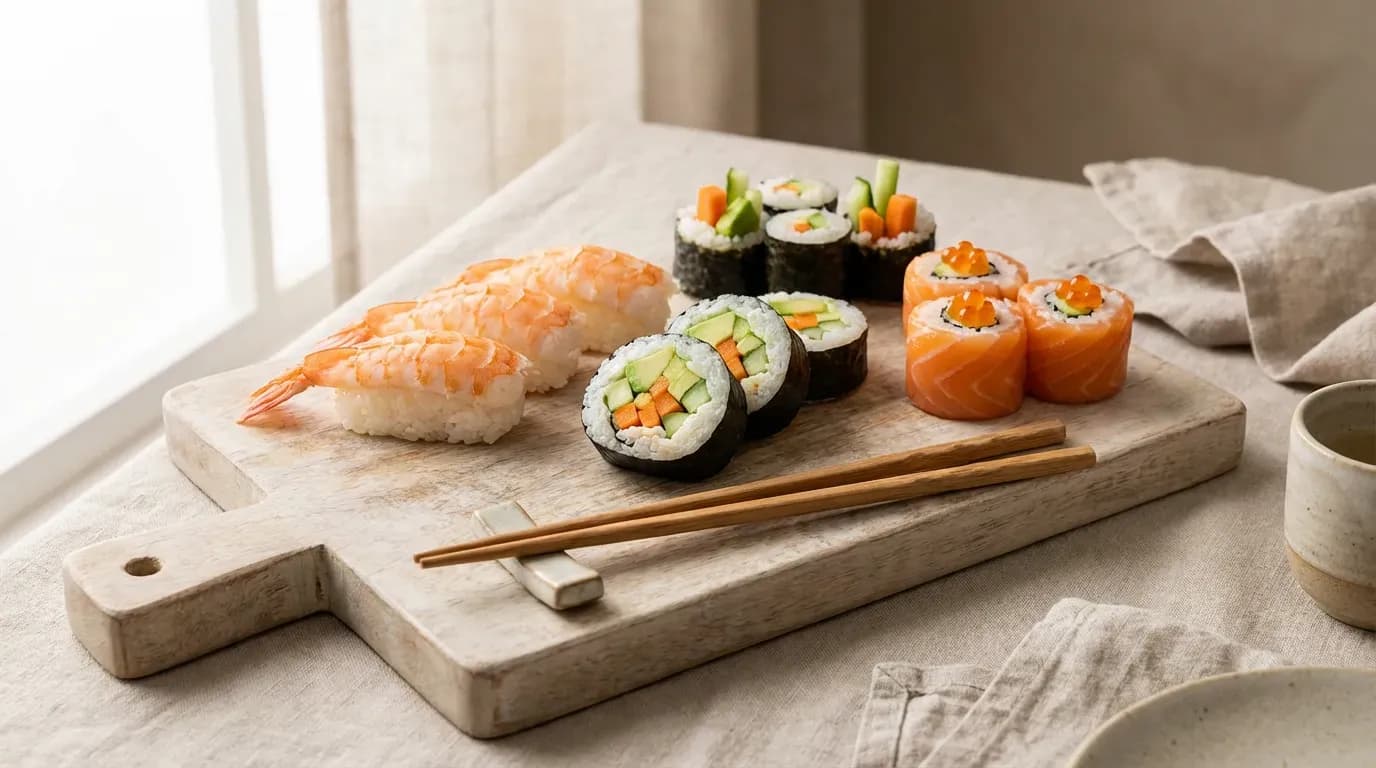
This is the part that often gets lost. "Sushi" just means vinegared rice with toppings or fillings. Loads of sushi options don't contain any raw fish at all:
- Cooked prawn (ebi) and prawn tempura rolls
- Cooked crab rolls (including California rolls with cooked crab, not imitation)
- Vegetable rolls: cucumber, avocado, sweet potato, pickled radish
- Tamago (egg) sushi
- Teriyaki chicken or beef rolls
- Cooked eel (unagi)
All of these are perfectly fine during pregnancy. If you're craving sushi, you absolutely don't need to sit the whole meal out.
What about raw fish and sashimi?
This is the part where you'll see a lot of conflicting takes online. Our position is conservative, and it lines up with both the NHS and the FDA: while you're pregnant, sushi should only be eaten if the fish has been cooked thoroughly. Sashimi is out.
The NHS's foods to avoid in pregnancy page lists sushi under foods to be cautious about, and says it's only fine "as long as the fish has been cooked thoroughly." The FDA gives the same advice in stronger terms: pregnant people should only eat fish that has been cooked to safe internal temperatures, "which includes not eating raw fish like that found in some sushi or sashimi."
You'll sometimes read that raw sushi is fine in the UK as long as the fish has been commercially frozen first. Freezing reduces the parasite risk, but it doesn't address listeria and other bacteria, and we don't think it's the right call for a pregnant reader to make on the basis of a guess about whether a specific restaurant or supermarket followed the freezing rules. The downside if something goes wrong is severe and irreversible. Cooked sushi for the next few months is the safer trade.
Fish to genuinely avoid
Regardless of whether the fish is raw or cooked, some types are best avoided during pregnancy because of mercury levels:
- Swordfish
- Shark
- King mackerel
- Marlin
- Bigeye tuna (the large, deep-red tuna you sometimes see at sushi bars)
Regular tuna (like the yellowfin or albacore commonly used in sushi rolls) is fine in moderation. The NHS recommends no more than two tuna steaks or four medium cans of tuna per week during pregnancy, which is plenty.
Salmon, shrimp, crab, and most white fish used in sushi are all low in mercury and perfectly safe.
The smoked salmon question
Cold-smoked salmon (the kind you'd find on a bagel or in a sushi roll) is not cooked. It's cured and cold-smoked, which doesn't reach the temperatures needed to kill listeria.
The NHS is clear on this one. Their foods-to-avoid list specifically calls out "cold-smoked or cured fish (for example smoked salmon or gravlax, including in sushi), unless it has been cooked until steaming hot." The FDA matches: refrigerated smoked seafood (labelled "nova-style," "lox," "kippered," "smoked" or "jerky") should not be eaten during pregnancy except in a cooked recipe like a casserole. Canned or shelf-stable smoked seafood is fine.
Hot-smoked salmon (which is fully cooked through) is a safe alternative, as is smoked salmon that's been cooked into a hot dish, like a baked roll or a hot pasta.
The bottom line
The "no sushi at all" rule is too broad. Plenty of sushi is completely safe during pregnancy. But the part that needs to go is the raw fish, not the whole meal.
Here's the quick version:
- Safe: fully cooked rolls, vegetable rolls, tamago, prawn tempura, cooked crab, hot-smoked salmon
- Avoid: raw fish and sashimi of any kind, cold-smoked or cured salmon, and high-mercury fish (swordfish, shark, king mackerel, marlin, bigeye tuna) whether raw or cooked
The hardest part of pregnancy nutrition isn't the rules themselves. It's making sense of the conflicting advice and figuring out what actually applies to you. If you're constantly second-guessing what's safe to eat, you're not alone.
That's why we're building PregSafe: to give you clear, evidence-based answers about food, drinks, and ingredients during pregnancy, without the hours of Googling. Join our waitlist to be the first to try it.
PregSafe is not a replacement for medical advice. Always consult your healthcare provider for personalised guidance.