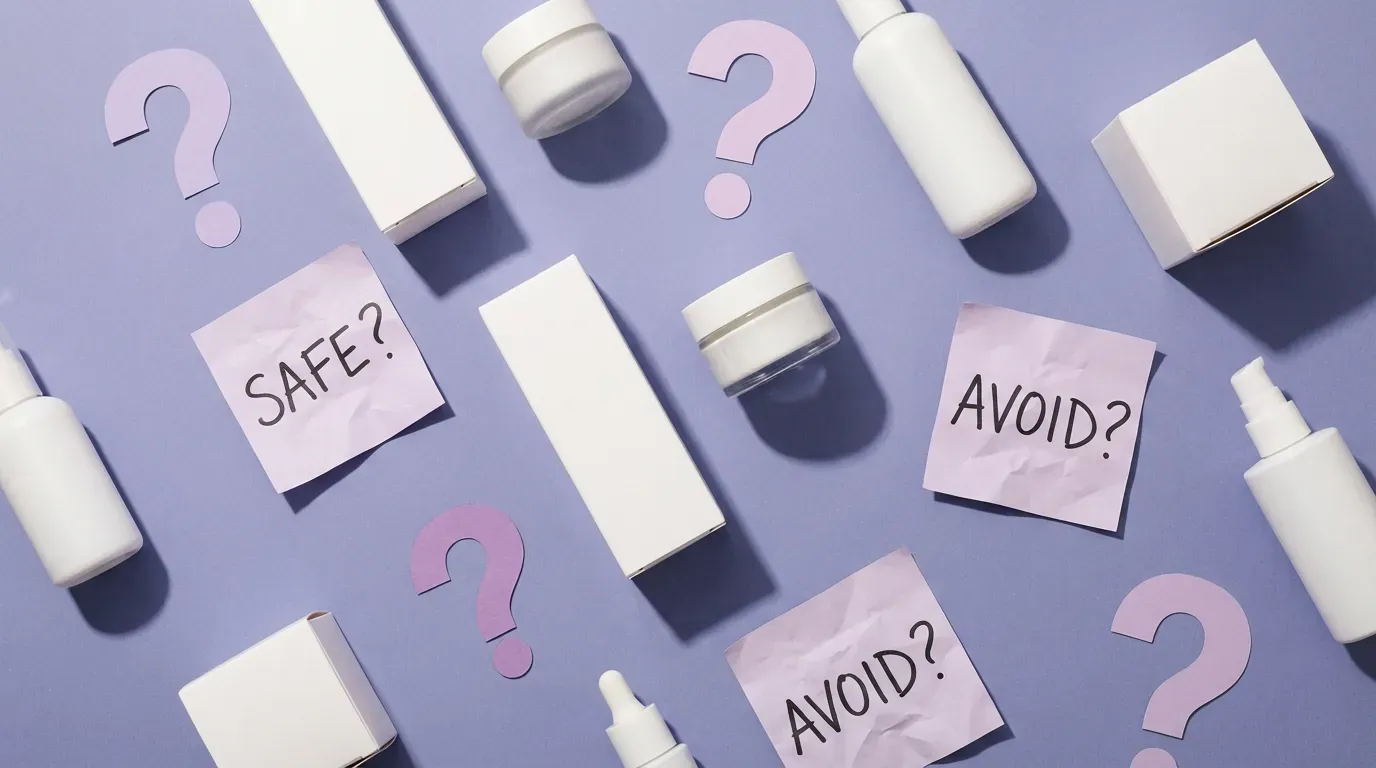
When you're trying to conceive or see those two pink lines, one of the first things you probably did was Google "what can't I use when pregnant?"
If you're anything like us, you then spent the next three hours spiralling through conflicting advice, fear-mongering blog posts, and ingredient lists that might as well have been written in another language.
One website says retinol is absolutely forbidden. Another says low concentrations are fine. Your friend swears by a serum that a different friend told you to bin immediately. The NHS website offers broad strokes, but doesn't help you decode the 47-ingredient list on the back of your moisturiser.
So why is pregnancy safety advice so maddeningly inconsistent?
The problem isn't you
Here's the uncomfortable truth: the information out there is fragmented, outdated, and often driven by fear rather than evidence.
Research funding is abysmal. Only 2% of UK medical research funding goes to pregnancy, childbirth, and female reproductive health. That's despite one in three women experiencing a reproductive or gynaecological health issue in their lifetime. When research is underfunded, guidance stays vague.
Ingredient transparency is poor. Many cosmetic and food companies aren't required to disclose everything. "Fragrance" can hide dozens of unlisted chemicals. "Natural flavours" tells you almost nothing. You're expected to trust blindly or become a chemistry expert overnight.
Advice is often fear-based, not evidence-based. The internet loves a good scare story. "Avoid ALL chemicals!" sounds definitive, but it's not helpful or realistic. Meanwhile, genuinely concerning ingredients fly under the radar because no one's talking about them in plain English.
One-size-fits-all guidance doesn't work. Pregnancy safety isn't the same as general safety. What's fine for the average person might affect hormone balance, fertility, or fetal development. But most resources don't make that distinction, leaving you to guess.
What would actually help
You shouldn't have to spend hours cross-referencing scientific studies or second-guessing yourself every time you use your favourite face cream.
What's missing is a tool that translates complex ingredient data into plain guidance, built specifically for TTC, pregnancy, and postpartum. Something that acknowledges uncertainty and explains the reasoning, not just a yes or no answer.
What we're building
PregSafe started from our own frustration. As two mums who've been through TTC and pregnancy, we know what it's like to stand in the skincare aisle, phone in hand, Googling ingredients and getting seven different answers.
So we're building an app that does what we wished existed: scan a barcode, upload an ingredient list, or ask a question in plain English, and get an answer based on one of the most comprehensive pregnancy ingredient databases available.
We're not about toxic fear or unrealistic "clean living" standards. We're about giving you the information to make whatever decision feels right for you.
Get early access
PregSafe is launching soon. Join our waitlist to be the first to know when the app goes live.
PregSafe is not a replacement for medical advice. Always consult your healthcare provider for personalised guidance.